


From zero documentation to incident-ready: how a security analyst uses Think4Ever
Jake Williams is a developer and security analyst who responds to incidents in internally built applications, often ones with no documentation at all. A self-described critic of AI coding platforms, he now uses Think4Ever to generate the architecture, user flows and data flow diagrams security teams need, straight from the codebase.
“Real talk: this is the kind of documentation that security teams need.”
The challenge
AI coding tools that need constant supervision. Jake had used AI coding platforms but remained skeptical. He found himself babysitting the agents, and every time he was close to deciding they were worth it, he would find another logic error or security issue in their output.
When he traced those breakages back, a common pattern appeared. An agent would change one part of the code, such as a function signature needed for a new feature, without updating everything that depended on it. The change worked in one place and broke another.
Incidents in applications nobody documented. As an incident responder, Jake regularly investigates internally developed applications that have no documentation. Before he can contain or assess an incident, he has to work out how the application is built, how users move through it and where its data goes. Teams that work in an Agile way often have little design documentation to hand over, which makes that reconstruction slow and puts it on the critical path of the response.
The solution: point Think4Ever at the code
Think4Ever keeps an application's architecture, code and dependencies connected. For Jake, that shift from editing code in isolation to working from the full design context is what makes the difference.
When there is no documentation, Think4Ever builds it from the existing code. Jake singles out the automatically generated diagrams as possibly the platform's best feature:
- User Flow diagrams. Show how users move through the application, the view an investigator needs to understand how an attack path might unfold.
- Data Flow Diagrams (DFDs). Show how data moves between components and where it is stored, the foundation of threat modeling and of scoping what an incident may have exposed.
- Concept View. Maps the relationships between the application's functions.
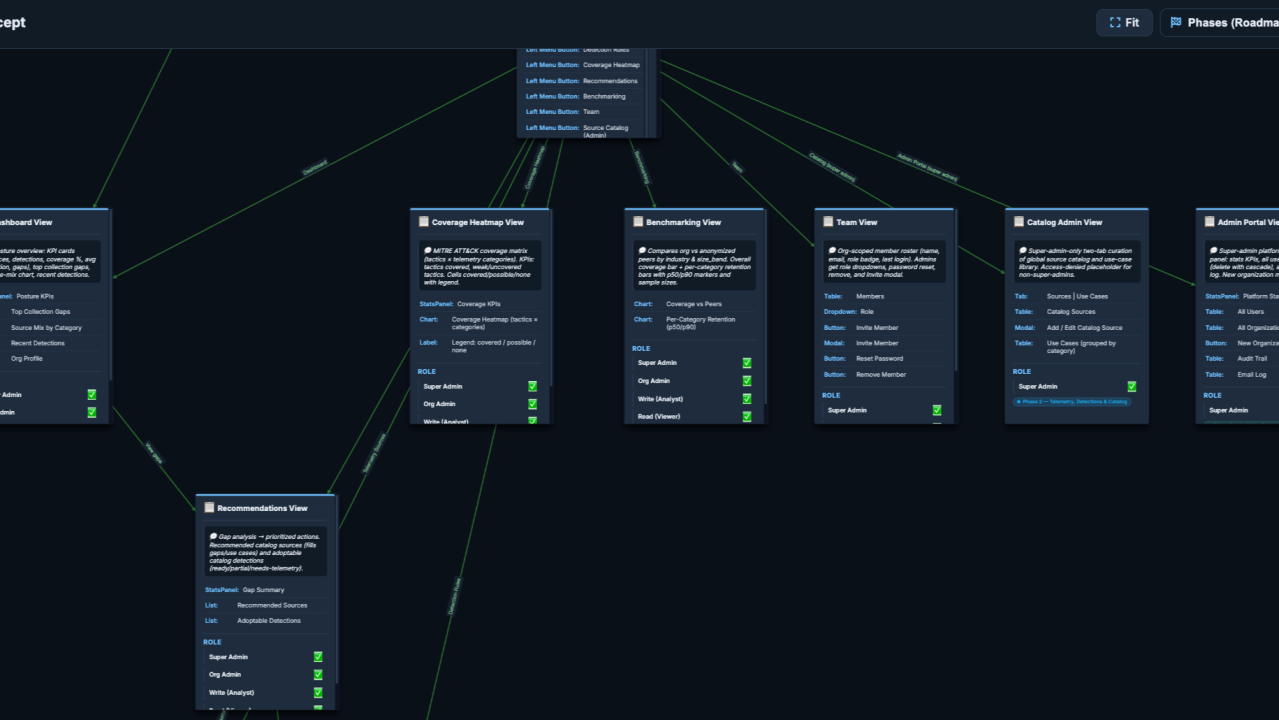
“From now on, I’ll be throwing that codebase in Think4Ever to create those documents.”
Business rules that keep agents on track
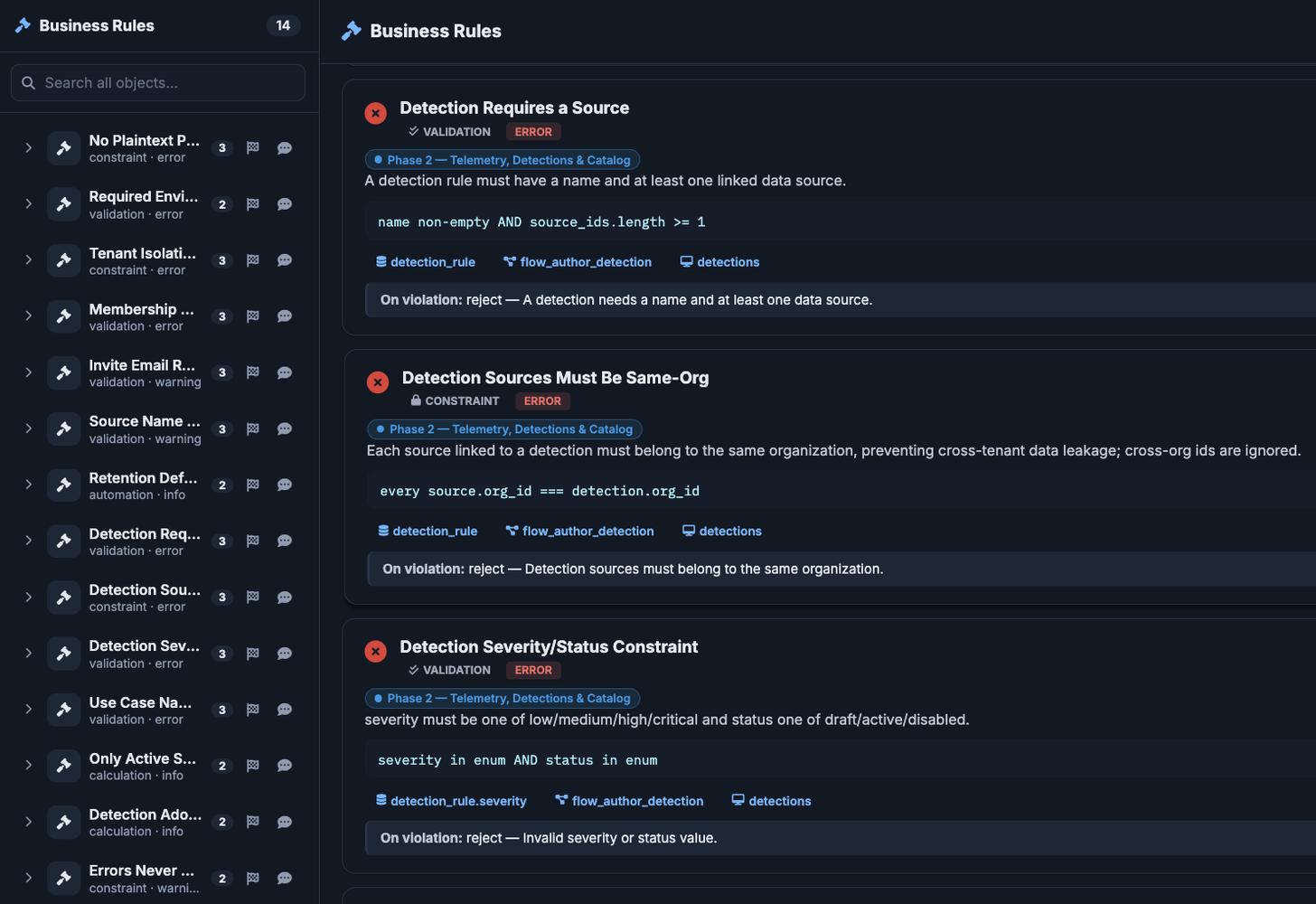
Think4Ever infers business rules as an application is described, and its coding agents follow them when making changes. Jake didn't write any of the rules himself, and on review he found them accurate. Each rule references the parts of the application it applies to and links directly to them, which makes the rules easy to verify and audit.
Changes that don't break what depends on them
Because Think4Ever keeps the project's design details in context, Jake no longer sees the failure that frustrated him with other tools: an agent updating a function without updating its callers. As Think4Ever puts it, a change anywhere propagates everywhere.
From a plain-language idea to a working demo
To test the platform, Jake described a concept for an application in plain language. Think4Ever built a working demo, complete with a database schema, and hosted it in AWS so others could use it and give feedback. He did not write the code himself.
“Think4Ever feels like a tool built for developers, by developers.”
No lock-in
Jake points to the Export button as a sign of Think4Ever's approach: he has yet to find anything the platform won't let him export.
How it changes incident response
| Task | Before | With Think4Ever |
|---|---|---|
| Understanding an undocumented app | Manually reading code to reconstruct architecture during an active incident | Architecture, Concept View and specs generated from the codebase |
| Tracing user and data paths | Hand-drawn or missing user flows and DFDs | Auto-generated User Flow diagrams and DFDs |
| Verifying intended behavior | Rules implicit in code or in people's heads | Inferred business rules, each linked to the code it governs |
| Keeping records | Findings scattered across notes | Diagrams and specs exported for reports and follow-up |
Why this matters for security teams
Jake's experience points to value well beyond individual developers:
- Faster incident response. Generated User Flow and Data Flow Diagrams give responders a map of an unfamiliar application from day one of an incident.
- Better threat modeling. DFDs and linked business rules provide a starting point for threat models and security reviews, even for applications that were never documented.
- Visibility into AI-built code. Many teams now ship applications built quickly with AI coding tools and have no coherent picture of what was built. Think4Ever can reconstruct that picture, so security teams can assess code they didn't write and weren't told about.
- Traceability and audit. Architecture, rules and changes stay connected and traceable, and everything can be exported for audit and compliance records.
What's next
Jake plans to cover more of the platform in future posts.
About Jake Williams
Jake Williams is an enterprise risk management expert, developer and security analyst who responds to incidents in internally developed applications. Disclosure: Jake is an adviser to Think4Ever Global Inc. He began advising after using and evaluating the platform.
About Think4Ever
Think4Ever is an AI-native SDLC platform that keeps architecture, code and every dependency connected. Its multi-agent design and development platform captures requirements and business rules as approved intent in a Living Blueprint, generates architecture and documentation, and builds working applications from that shared context, in Think4Ever or in the coding agents your team already uses.
Design it first. Then build it.
Turn your idea or your existing code into a reviewed Living Blueprint, and build from it in Think4Ever or the coding tools you already use.
More customer stories

EY Caribbean
EY Caribbean delivers client software from one governed Living Blueprint, targeting a 50–60% shorter delivery cycle.

YogiFi
A founder with limited resources takes a new idea from requirements to a deployed product.

Insignian Homes
A global exporter replaces per-seat SaaS with applications it designs and owns, starting with CRM.