
Understand the system.
Change it with confidence.
Turn a codebase into a shared, reviewable system map in minutes—then keep every change aligned with business intent.
Understand and visualize your system.
Build systems faithful to business intent.
AI writes code faster than your team can understand it. With every sprint, the gap grows.
Every task starts from fragments
Each agent session reconstructs only part of the system.
Knowledge lives in different places
Code, workflows and business decisions drift apart.
A local change becomes a system change
One decision can alter APIs, data, workflows, UI and tests.
One system. Every perspective.
Architecture for engineering. Workflows for operations. Business rules for product. One connected model underneath.
Architecture and dependencies
Workflows and exceptions
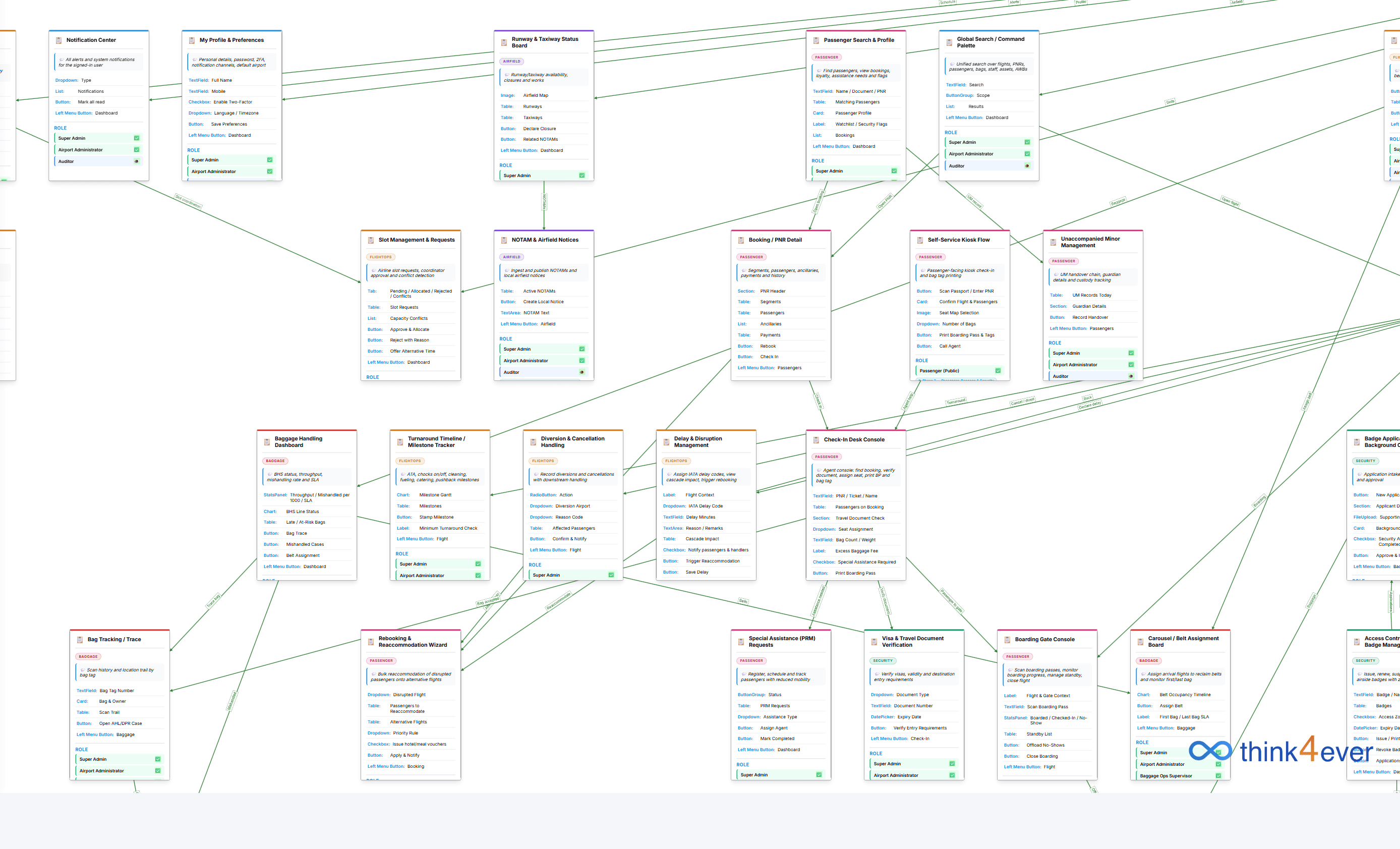
Screens & Navigation
Every screen of your application on one visual map, with the navigation paths between them. Click any screen later to refine it or design its UI.
Journeys and business rules
Services, APIs and information flows
See how the whole system works.
Give every role the view it needs, connected to the same source of understanding.
Keep every change true to intent.
Compare proposed implementation with approved business rules and see its system-wide impact.
Choose how the work gets done.
Keep reviewed context consistent across coding tools, models and execution environments.
Share the same reviewed context with Claude Code, Codex, Cursor, Windsurf and other MCP clients.
Approve intent. See impact before execution.
See when a proposed change conflicts with an approved rule—and what else it affects.
Understand in Think4Ever. Code anywhere.
Give every coding agent the same reviewed system context.
Context
Connect. Review. Change.
Connect
Link a repository or upload a project.
Review
Validate the system map with the people who know it.
Change
Build in Think4Ever or carry approved context into your coding agent.
What do you need to understand or change?
Choose the fastest path to a useful system view. You can switch paths later.
CODE → UNDERSTANDING
Analyze existing code
Turn a project into a visual, reviewable map of the system.
CODE → PRODUCTION READY
Production hardening
Import your codebase, map the system, then let reviewer agents audit it against a production-readiness checklist: security, configuration, reliability, data, observability, deploy and more.
INTENT → SYSTEM DESIGN
Design from intent
Define what must be true and review the system before implementation.
Watch Think4Ever work in both directions.
See an existing project become an inspectable system model, then see reviewed system intent guide implementation.
Upload the codebase you're afraid of.
In minutes you'll see how it actually works—and what every change would touch.